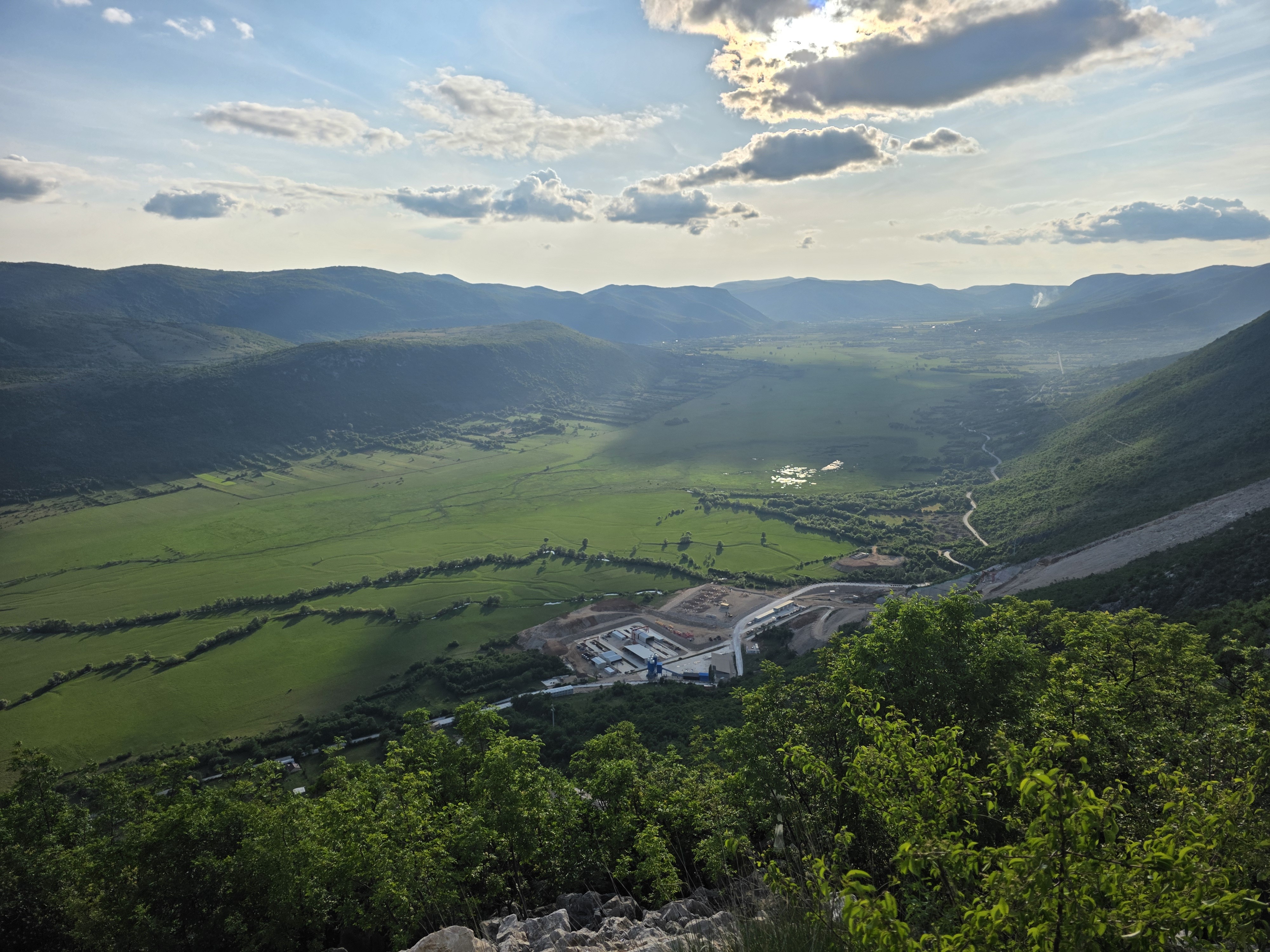
New Bankwatch article highlights growing concerns around the Dabar hydropower plant in Bosnia and Herzegovina
News
The views expressed in the article are those of CEE Bankwatch Network.
Read the full article by CEE Bankwatch Network here: Obstacles pile up for the Dabar hydropower plant in Bosnia and Herzegovina: Time to rethink the whole Upper Horizons complex, Story by Pippa Gallop, Southeast Europe Energy Policy Officer, CEE Bankwatch Network
In the Balkans, many rivers still flow through landscapes of exceptional ecological value. They support wetlands, springs, agricultural areas and local communities, while providing habitats for rare and often endemic freshwater species. Yet these rivers are increasingly threatened by infrastructure projects that can permanently alter the way water moves through the landscape.
One of these cases is the Dabar hydropower plant in Bosnia and Herzegovina. It is part of the wider Upper Horizons hydropower complex, a large scheme designed to divert water from the Neretva river basin towards another river system through tunnels, reservoirs and channels. While hydropower is often presented as a renewable source of energy, projects of this scale can have serious consequences when they are planned in fragile freshwater ecosystems.
The main concern is that diverting water from one basin to another can disrupt the natural balance of rivers, springs, wetlands and underground water flows. In this region, water does not only flow on the surface: it also moves through complex underground systems, feeding springs, rivers, fertile plains and wetlands. Changing these flows could reduce water availability in some areas, affect seasonal wetlands, disturb fish habitats and weaken the ecological balance of the wider Neretva basin.
The potential impacts are not limited to the immediate construction site. According to CEE Bankwatch Network, the Upper Horizons complex could affect several sensitive areas linked to the Neretva and its tributaries, including karst fields, freshwater habitats and downstream ecosystems. Changes in water flows could also have consequences for farming areas and local communities that depend on these waters for agriculture, livelihoods and well-being.
The project also raises concerns for biodiversity. Balkan rivers are home to many species that are highly adapted to local conditions, including fish species found only in specific river systems. When rivers are dammed, diverted or fragmented, these species can lose the habitats they need to feed, reproduce and survive. Seasonal wetlands and floodplains, which depend on natural variations in water levels, are particularly vulnerable to such changes.
In a new article, CEE Bankwatch Network explains that when financing agreements for the Dabar plant were signed with China Eximbank at the end of 2021, the project appeared to be moving forward as the first and largest part of the Upper Horizons complex. More than four years later, however, the project is facing a growing number of obstacles: construction difficulties, unresolved expropriations, legal challenges, financial uncertainty, and concerns over environmental permits based on an outdated impact assessment.
For Bankwatch, these obstacles are not simply delays in the construction process. They point to deeper questions about the viability of the project and the risks it poses to people and nature. The article argues that the current situation should be seen as an opportunity to rethink the whole Upper Horizons complex before the most serious impacts occur. While some works have already taken place, Bankwatch stresses that the main impacts would come when the reservoirs are filled and the hydropower plants start operating, meaning that part of the damage can still be avoided.
This is where the message of the article is particularly clear: continuing with the project simply because money has already been spent would not be enough justification. Bankwatch calls instead for Republika Srpska to “cut its losses” and pursue less damaging energy options, rather than pushing ahead with a scheme whose ecological and social costs could be felt far beyond the construction site.
The Dabar case illustrates a broader challenge faced by many freshwater ecosystems in the region. Rivers in the Western Balkans are under pressure not only from hydropower, but also from road construction, mining, gravel extraction, poorly planned flood-control works and weak implementation of environmental legislation. These pressures can accumulate across entire river basins, gradually reducing the resilience of freshwater ecosystems and the benefits they provide to people and nature.
This work is part of BRACE – Balkan Rivers: Advocacy for Conservation of Ecosystems, a project supported by DIMFE. Through BRACE, CEE Bankwatch Network works with local partners across the Mediterranean regions of the Western Balkans and Croatia to prevent public money from supporting projects that could damage rivers and freshwater ecosystems. The project combines scientific evidence, legal analysis, advocacy, communication and support to local organisations to strengthen environmental safeguards and promote better protection of valuable river ecosystems.